
What Is “Blue Dot Fever” & How Does It Affect Concert Fans?
There have been a rash of artists both in and outside of country music canceling highly promoted tours in the last few weeks. Notable examples include Post Malone, Meghan Trainor, Kenny Chesney, and the Pussycat Dolls. While each act has cited a different official reason, industry professionals have noticed a common thread among many of these cancellations: unsold tickets. In fact, the pattern has become so noticeable that it has taken on a name of its own: “blue dot fever.” And I think ticket resellers helped create the problem in the first place.
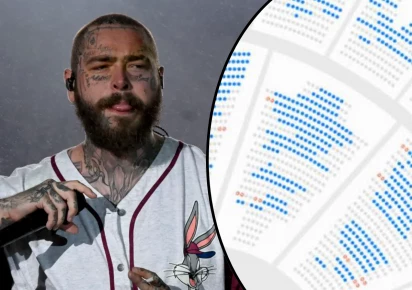
Blue Dot Fever is a phrase coined by industry insiders that claims artists are cancelling tours when ticket sales are slow to take off, rather than taking the hit at a financially underperforming event. This is not just about canceled tours, it is about the collapse of trust between fans, ticketing platforms, promoters, and artists.
How did we get here?
I want to talk about how we went from no live concerts during the pandemic to everybody touring all at once, capitalizing on fans’ need to get back to in-person events. Ticket brokers jumped on that opportunity and increased the inventory they were willing to take on at the beginning of event sales, practically selling out the tours themselves, then jacking up resale prices as high as the market could tolerate. This made sure that whether there would be an attendee for each ticket or not, the initial run of tickets still sold out, and the broker made multiple times their investment without even having to resell their entire inventory.
This meant fans who paid several times the face value for premium seats would show up to an event that could be 25% or more below capacity. Because so much of the inventory got locked up in the resale marketplace, the shows were 100% sold out with far less than 100% attending. Fans were price-gouged and felt that as a betrayal that they often attributed to artist greed. Merch vendors and concessions didn’t reach optimal sales. Sponsors and advertisers didn’t reach as many eyeballs as their campaign goals accounted for. Even the artists took hits as the overall energy of shows were affected. So that’s one problem… resale brokers front-loading initial onsale figures without it panning out to actual attendees. Attendees feeling taken advantage of as the “sold out” marquee appears to be a lie. Ancillary businesses taking hits based on unreliable attendance estimations.
The Backlash
So fans’ response to this whole situation was to rely on either fan club presales with secret codes, lotteries, and never-ending queues, direct box office purchases, or waiting until 2 hours prior to the show when resellers dump their inventory back down to near face value pricing. That means that the illusion of a fast selling show is over; It wasn’t sustainable to begin with. You can only make a consumer feel taken advantage of so many times before they direct their entertainment dollar elsewhere.
And on the industry side…
On the other side of the situation are the artists and their teams. But this is where the conversation gets complicated. Because as easy as it is to roll our eyes at another vague cancellation statement, the truth is that tours are not casual weekend plans. They are massive, moving businesses. These tours rely on hundreds of people and thousands of man-hours. Equipment rentals that could finance a small country. Planning, logistics, rehearsals, and so much more that often begin up to a year prior to the first show… and it could all be for nothing if tickets don’t sell.
So they have internal milestones they try to reach through balancing promotion, pricing, and PR so that a predetermined percentage of tickets inventory is sold by a certain cut-off date that would guarantee that these upfront expenses will be reimbursed… and that’s before anyone even talks about profit or reputation. A tour that doesn’t sell is a death-knell for a live act. So like an injured athlete, if they can’t guarantee a good performance for the fans, they forfeit the game.
Notable Cancellations
Here are just a few concert cancellations that have been announced in the last 90 days. While not all of them are sales-related, it certainly shakes consumer confidence that a ticket purchase guarantees a show will take place, and that’s bad business for everyone involved. Fans are now quick to villainize the artist if the sales data looks soft, regardless of the reason the artist cites for their cancellation.
Colter Wall canceled remaining 2026 dates and announced an indefinite hiatus from live music, citing mental health. Billboard Canada reported the canceled dates included Indianapolis, Cincinnati, and Detroit.
Randall King paused touring in March, citing faith, health, mental health, family, and professional help. Taste of Country listed canceled festival appearances and postponed dates in El Paso, Tucson, Anaheim, San Luis Obispo, and Sacramento.
Marcus King canceled his Australia/New Zealand run after Byron Bay Bluesfest was canceled. His explanation was explicitly business/logistics related: without the anchor festival, the trip “just isn’t possible.” The same report notes Bluesfest cited rising production, logistics, insurance, touring costs, softer ticket demand, and international uncertainty.
Kenny Chesney canceled two July 2026 Sphere dates in Las Vegas. The official explanation centered on the July 4 holiday conflict, but Taste of Country also noted a “healthy number” of tickets still available for July dates on Ticketmaster.
So what comes next?
How does the industry course-correct so fans don’t lose faith in the game? My personal opinion is that the arenas need a break, and so do the wallets. Let the amphitheaters of the nation do the heavy lifting for a while, even if tickets become harder to get. Let destination events have a moment in the sun; residencies and package experiences that are a little harder for the resellers to manipulate. Lobby for a cap on resale price increases above a certain percent of face value to disincentivize resellers from scooping up all the inventory. Go back to announcing a tour in stages with your primary route first, and secondary cities well, second if the primary is hitting the sales goals. That’s how things were done for decades before the pandemic and there’s good reason for it. Because when fans stop believing the ticket-buying process is fair, the blue dots are only the beginning.
